
.png)


March 29, 2026
Oven is not Heating Properly
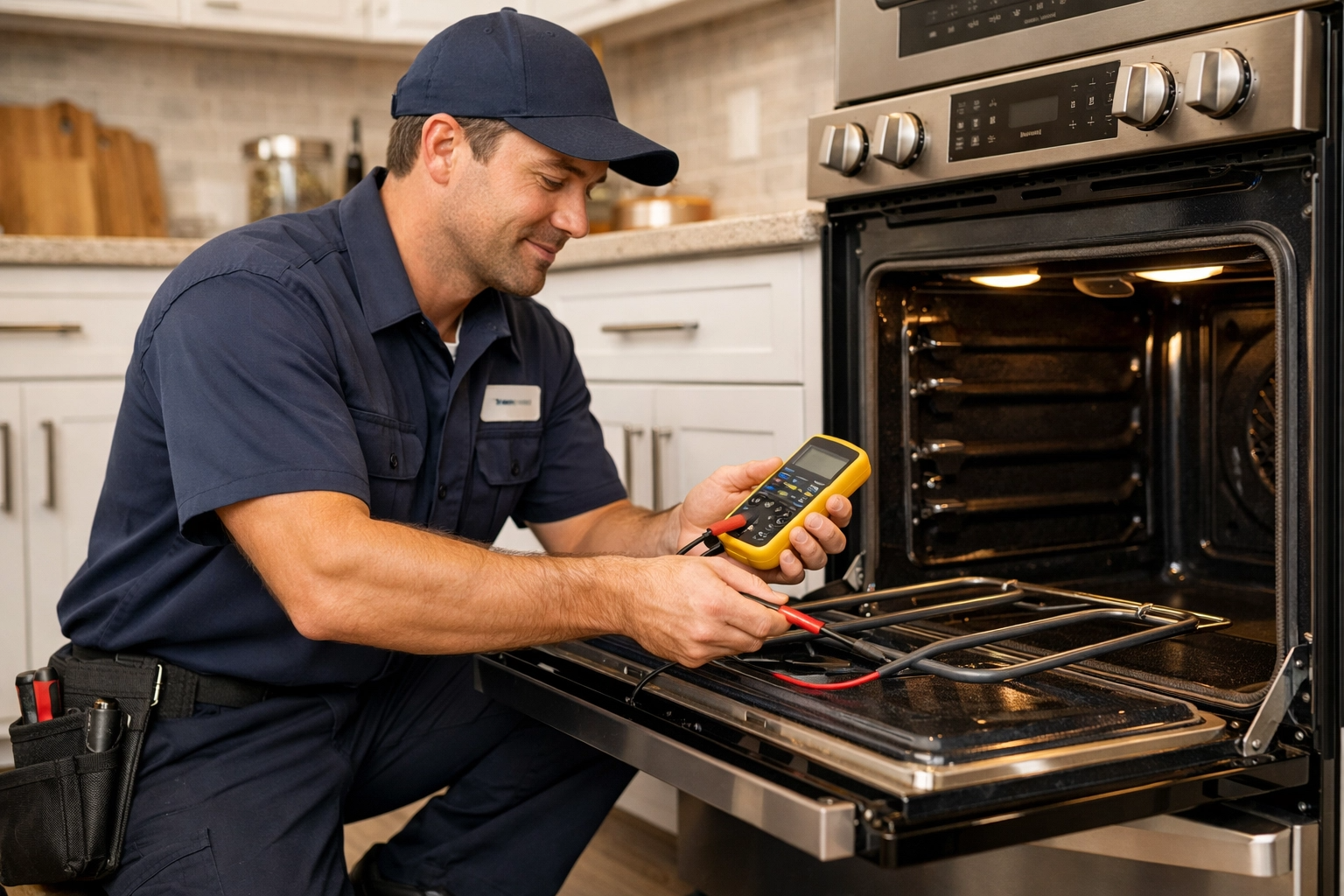
Oven Not Heating Up? A Comprehensive Guide for Coachella Valley Homeowners
Few things are as frustrating in the kitchen as an oven that refuses to heat. Whether you're preparing a family meal or baking a special treat, a malfunctioning oven can bring your culinary plans to a screeching halt. If your oven isn't heating, heating unevenly, or simply not turning on, it's a clear sign that something is amiss.
At CA Appliance Repair, we understand the inconvenience and stress a broken oven can cause. Serving the entire Coachella Valley, our certified technicians are experts in diagnosing and repairing all types of oven issues, ensuring your kitchen remains the heart of your home.
Understanding Why Your Oven Isn't Heating
The cause of an oven not heating can vary significantly depending on whether you have an electric or gas model. Let's explore the common culprits for each:
For Electric Ovens:
Electric ovens rely on heating elements and a complex electrical system to reach and maintain temperature. When they fail to heat, these are the usual suspects:
- Faulty Heating Elements: The most common reason. Both the bake element (at the bottom) and the broil element (at the top) can burn out. You might notice visible damage like blistering, breaks, or a lack of a red glow when the oven is on.
- Defective Temperature Sensor: This sensor monitors the oven's internal temperature and communicates with the control board. If it's faulty or out of calibration, the oven won't regulate heat properly, leading to underheating or no heating at all.
- Blown Thermal Fuse: A critical safety device, the thermal fuse will trip and cut power to the oven if it detects overheating. This prevents damage but also means your oven won't heat until the fuse is replaced.
- Malfunctioning Oven Control Board: Often referred to as the oven's "brain," the control board manages all oven functions. A failure here can prevent any heating elements from receiving power.
- Tripped Circuit Breaker: Electric ovens typically operate on a dedicated 240-volt circuit. If one side of the double-pole breaker trips, the oven might still have power for lights or the clock, but not enough to heat the elements.
For Gas Ovens:
Gas ovens use an igniter to light natural gas or propane, which then heats the oven cavity. Issues here often revolve around the gas supply or ignition system:
- Faulty Igniter: This is the most frequent cause of a gas oven not heating. The igniter doesn't just create a spark; it also needs to reach a specific temperature to open the gas valve. If it's weak or broken, the gas valve won't open, and the burner won't light.
- Defective Gas Safety Valve: This valve controls the flow of gas to the burner. If it's stuck closed or malfunctioning, no gas will reach the igniter, and thus, no heat will be produced.
- Clogged Burner Ports: Over time, food spills and debris can clog the small ports on the burner. This prevents an even flame and can lead to poor heating or no ignition at all.
- Issues with Spark Ignition (for models with pilotless ignition): If your gas oven uses a spark igniter, problems with the spark electrode or the ignition module can prevent the burner from lighting.
Troubleshooting Steps You Can Take
Before reaching for the phone, here are some basic checks you can perform:
- Check the Power Supply: For electric ovens, ensure the circuit breaker hasn't tripped. For both types, confirm the oven is properly plugged in.
- Inspect Heating Elements (Electric Ovens): Visually check the bake and broil elements. If they appear broken, blistered, or don't glow red, they likely need replacement.
- Verify Gas Supply (Gas Ovens): Ensure the gas shut-off valve behind the oven is fully open. If other gas appliances (like your stovetop burners) are working, the main gas supply is likely fine.
- Reset the Oven: Sometimes, a simple power cycle can resolve minor electronic glitches. Turn off the oven at the breaker for a few minutes, then turn it back on.
- Check Oven Settings: Ensure the oven isn't accidentally set to a special mode like "Sabbath Mode" or "Demo Mode," which can prevent heating.
- Examine the Door Seal: A loose or damaged door seal can allow heat to escape, leading to inefficient heating or the oven struggling to reach temperature.
When to Call the Professionals at CA Appliance Repair
While some issues can be resolved with simple troubleshooting, many oven problems require the expertise of a trained technician. Attempting complex repairs yourself can be dangerous, especially with gas appliances, and may void your warranty. If you notice any of the following, it's time to call the experts:
- Visible Damage to Heating Elements: If an electric element is clearly broken.
- Smell of Gas: This is a serious safety concern. Turn off the gas supply and call for professional help immediately.
- Error Codes Displayed: Modern ovens often display codes that indicate specific internal faults.
- Oven Heats Unevenly or Partially: This suggests a deeper issue with elements, sensors, or gas flow.
- Control Panel Unresponsive: If the oven's controls aren't working, it could be a control board issue.
For reliable and efficient oven repair in the Coachella Valley, trust the experienced technicians at CA Appliance Repair. We specialize in diagnosing and fixing a wide range of appliance issues, ensuring your kitchen gets back to full functionality quickly and safely. Don't let a cold oven ruin your next meal.
Contact CA Appliance Repair Today!
Ready to get your oven heating perfectly again? Contact us for expert appliance repair services.
- Call Us: (760) 688 0803
- Book Online: Schedule Your Oven Repair Here
- Find Our Location: Visit Us on Google Maps
Let CA Appliance Repair bring the warmth back to your kitchen!
